Friday, November 3, 2017

Paid In Full


No More Hell To Pay, the tenth studio album released by Stryper on November 5, 2013, may simply be the single best album ever of all time anywhere on planet earth.  How's that for a bold claim?

There are many albums that I loved initially, but whose enjoyment for me faded over time.  There are albums that are fantastic, but that have one or two songs I can comfortably skip.  There are albums that I still love and sing along with in the car, but if someone starts talking, I will just turn them down a bit, happy to let them play in the background.

And then there is No More Hell To Pay.  I want it loud, start to finish, with no interruptions.  If someone starts talking while I'm playing it, I will hit pause, because I do not want the music interrupted.  Oh, and the combination of the music with the cover art...well, all that will be discussed in what follows.

The opening track (Revelation) begins with a nice, dark tone and opens up into a broad, full-throated piece that sets the pace for hard, in-your-face tunes that continue through the fading note of track 12, and lyrics like "blood, blood, blood will run and turn the waters red" set the stamp on its metal credentials. Track 2, the title song, continues with a dark intro and a pounding rhythm with scorching guitar.  If "apocalyptic faith" were a genre of music, this song would be its poster child with its chorus line, "If the dawn reveals the end of days, I'll follow You 'til there's no more hell to pay." 


Track 3 (Saved by Love)...good night! A fast, aggressive track that grabs your face from the first note, smacks you hard with Michael's screaming chorus, and makes you reach for the volume dial again. It ends in a frenzy of screams, guitar, and drums and without even letting you catch your breath blasts straight into Track 4, which is simply the best cover of any song ever. Stryper takes the Doobie Brothers classic "Jesus Is Just Alright," shoots it full of nitrous, and makes it hot.  When it slows down at the 2 minute mark, we are treated to the best of muscle-car '70s meets 21st century rock. Track 5 (The One) is the power ballad, guitar driven rather than piano driven, and it reminds me of "Blue Bleeds Through" from Michael's solo album Truth. Track 6 (Legacy) takes us to modern metal and a grittier tone to Michael's voice than usual. The chorus is reminiscent of Twisted Sister from the Stay Hungry days.  Track 7 (Marching Into Battle)...again, good grief. How can I keep my hands on the wheel when this song makes me start drumming along with Robert? Once again, Tim's powerful bass drives it home. This is a true anthem made to be heard in arenas, and with a lyric straight out of the book of Revelation, it is picks up where "Soldiers Under Command" left off.  And yes, I do have the opening as the ringtone on my phone.  And yes, my son and I made a Lego music video of it.


Track 8 is "Te Amo," which is a bit lighter, but is still solidly in the Stryper vein.  Although it is Stryper's nod to Oz' Hispanic roots and their legion of fans in Spanish-speaking countries, the words te amo are also Latin, which makes this Roman Rocker want to bang his head.  Track 9 (Sticks and Stones) has it all...great message, driving sound, and even a bit of humor. An honest song ("Sticks and stones may break my bones, but words will never hurt me, so they say.  Oh, well, yours hurt like hell."), it is one we can all relate to. Track 10 (Water Into Wine) again opens up with the wrecking crew of Robert's and Tim's drums and bass. This one has me singing at full volume and would easily have rocked the '80s. Track 11 (Sympathy) opens with severe guitar and Michael's trademark, full-chested vocals. A great melody takes this one through the roof.  Oh, and according to Michael, it was Dave Mustaine's (Megadeth) preference for this song that led to its becoming a music video.


The final track (Renewed) is right in line with "Blackened" and "Bleeding From Inside Out" from the Second Coming album and even has a chorus that, intentional or not, has a clear link with John Donne's Holy Sonnet 14.  With Stryper we hear, "Take me, shape me, break me, make me renewed," and with Donne we read, "break, blow, burn, and make me new."  Now who says rock doesn't have literary cred!

The whole album screams with Michael's and Oz's incomparable guitars, and the cover art, well, it is again, quite simply, the best album cover I have seen in decades of listening to music. I keep staring at and don't want to take my eyes off it.  Stanis Decker, who also did the cover for Stryper's Fallen and Sweet & Lynch's Unified, created this masterpiece, the full size poster of which hangs framed in my garage.


I am something of a synesthete.  For reasons I cannot explain, certain sounds and colors are the same for me, and the colors of the No More Hell To Pay cover perfectly match the music in my mind.  The sounds ARE the cover for me, and this complete package of killer music and cover art is what makes this the perfect album.

Sunday, October 29, 2017

Serpens Albus


I'm not sure if any album was better suited to launch me into a lifetime of enjoying hard rock and metal music than Whitesnake's 1987 release.  I had already been enjoying the sounds of Stryper and Bon Jovi, but in the late spring of my senior year in high school, Whitesnake released their self-titled seventh album, and  the soundtrack of my life would be changed forever.  Described in the Columbia Record and Tape Club's monthly catalogue as being "Zeppelinesque," I had to give it a try.  As soon as it played through my jam box once, I was hooked.


It is a minor point to some, but the Latin phrase serpens albus at the base of the amulet caught my attention.  I was a Latin student back then with plans to become a Latin teacher, so that was, in my mind at least, immediately cool.  Still, it is all about the music, so let's get back to that.

The opening track, "Crying In The Rain," reaches out with a fist of iron, grabs you by the neck, and then passes you on to the next song, with each successive track manhandling you as if you were a rag doll to be left spent at the end of an album that you can't wait to replay from the start.  The whole thing is a tsunami of sonic aggression, and the lyrics have a pure blues-rock pedigree.  It has been said that David Coverdale could not write a song if the word "love" were removed from his vocabulary, and tales of needing love, losing love, and seeking love fill this album.  There are the ballads, of course, such as "Is This Love" and "Looking For Love," which was originally released only on the European version of the album, but what sold the album for me were Coverdale's vocals.  He remains one of my all-time favorite singers, and his vocals here are strong, soaring at times into the hair metal scream zone, but clear and able to carry the emotional freight of the songs.

A few months after purchasing the cassette, I found myself a freshman in college and soon discovered that I only had the tip of the iceberg, for there were six other Whitesnake albums I had never heard of.  I quickly began acquiring those and going absolutely nuts for their blues-rock roots.  Still, it was the granite-fist-in-a-steel-glove-smashing-me-in-the-face sound of the '87 album that made me wish I actually had speakers that could be cranked to eleven, and nothing captures that better than "Still Of The Night."  I remember once walking with a friend past a dorm on campus and hearing the sounds of this album blasting from one of the rooms.  I shouted up, "Hey, Whitesnake dude, is that a CD?"  Compact discs were still new, and I was impressed with the sound making its way down to the sidewalk.  He stuck his head out the window and said that it was, then asked if there were a track I wanted to hear.  I shouted, "Still Of The Night!"  Moments later my buddy and I were rocking out, and I knew that a CD player would be in my near future, and in fact it was this album that was my very first CD to accompany the Sony Discman that I got just a few months later.  Although I never had the album on white vinyl, I did have this poster in my apartment my senior year, and it will always be one of those songs that I turn up to ear-bleeding level whenever it comes on the radio.


I have been fortunate to see Whitesnake in concert three times, twice in the '80s and once in 2016, and through this band I came to know the music of Deep Purple, Led Zeppelin, and the rest of the rock legends, and their 1987 album was the start of it all.


For all these reasons, I had to get the 30th Anniversary Super Deluxe Edition that was just released.  And yes, I tracked its shipment on Amazon, hardly able to wait to get home from work the day it arrived, which was also the day of its release.


When they say "super deluxe," they aren't kidding with this item.  It all comes in a handsome, hefty, well-made box that  feels in the hand as if you are holding a tome of literature. In fact, David Coverdale himself said it felt like holding The Lord of the Rings trilogy, and from a rock perspective it is just as epic.


As you can see from the picture I took moments after taking off the cellophane as eagerly as a kid at Christmas, there are lots of goodies.  There is a handsome poster of the album cover that will soon be framed and hanging with my other favorite rock posters.  Now, working our way counterclockwise from the top left of the photo, we see the exquisite 60-page, hardback book chock full of photos from the era and text detailing everything you could want to know about the meteoric rise of this multi-platinum stunnner.


Next is the disc called "87 Versions," which starts out with four remixes of "Still Of The Night," "Is This Love," "Give Me All Your Love," and "Here I Go Again."  I listened to these alongside the original releases and the 2017 remasters (more on these later), and I can honestly say the remixes bring something fresh.  You can hear individual tracks and instruments more sharply, and often the low-end sounds are clarified, which contrasts them with the high-end vocals.  It is as if the lines of a sculpture have been chiseled anew, not differently, but to make the cuts deeper and to bring the details into sharper relief.  The disc goes on to include "Standing In The Shadows," "Looking For Love," "You're Gonna Break My Heart Again," and "Need Your Love So Bad" from the Japan mini album.  This last track is a true gem, one that may be unknown, criminally and tragically so, to many.


At the bottom left you can see the DVD, which is the first item I played in this treasure box.  It starts off with the four MTV videos restored and remastered in 5.1 of "Still Of The Night," "Here I Go Again," "Is This Love," and "Give Me All Your Love."  For some of us, this is how we want our music videos...lots of shots of the band in action and a bit of the story line dramatized.  Watching these takes you back to that golden age of rock videos and music television.  Next comes  "Video Memories - The Making Of The 1987 Album."  Coverdale narrates in that rich voice of his, and coming in at a full half hour, this is a great look at what took place.  It examines everything from Hugh Syme's design of the now iconic Whitesnake amulet, Tawny Kitaen's replacement of Claudia Schiffer in the videos, and of course the making of the music.  After this is the Purplesnake Video Jam of "Here I Go Again," which for me was simply the most wonderful gift. Backstage and behind-the-scenes clips are interlaced with footage from various concerts on that tour, and the effect is that you are reminded just how much fun rock was in those days.  The hair is big, the costumes are flashy, and taking me back to the days of my youth as it did, it darn near brought a happy tear to my eye.  The DVD concludes with actual tour footage of "Crying In The Rain," intros of the band members, and "Still Of The Night."  It was if it I were back in Louisville, Kentucky's Freedom Hall on February 14, 1988, when I saw Whitesnake for the first time.  The showmanship of David Coverdale, Adrian Vandenberg, Vivian Campbell, Rudy Sarzo, and Tommy Aldridge really shine through in these glimpses from the 213-date tour that tore through the United States, Canada, the United Kingdom, Japan, and Puerto Rico.


Next in the picture you see the disc of "Snakeskin Boots," which was the second disc I couldn't wait to open.  It contains twelve tracks recorded live in June of 1988 in Tokyo.  This is the mighty Whitesnake at the height of their hair-metal glory.  Songs are mostly from the '87 album, with "Slide It In," "Slow An' Easy," and "Love Ain't No Stranger" from their preceding album Slide It In.  Listening to the disc in 2017, the track I couldn't wait to hear was "Ain't No Love In The Heart Of The City."  Their cover of the 1974 Bobby Bland song appeared on their debut album Snakebite back in 1978 and became the featured song on all their tours.  I once asked David on the old Whitesnake bulletin board whether he had sung it or Deep Purple's "Mistreated" more often, and he replied that it would be hard to tell.  I love all of the countless versions I have listened to, and it is indeed one for the famous Whitesnake Choir that David loves and appreciates so much to join in on with full-throated abandon.  Of course the track that gets the crowd to blow the roof off the place is Track 10, "Still Of The Night."  There is nothing like this song, and nothing like it played live.


On on the bottom right is the disc "87 Evolutions," filled with demos and rehearsals.  I love this kind of thing.  It's like unearthing an original manuscript of a famous work and seeing how it changed over time.  We hear alternative arrangements and lyrics, and by gaining access to these works in progress, we are taken deep into the creative process.  If you are the kind of person who loves rockumentaries and the nitty-gritty of music development as I do, you will enjoy this disc.

The last disc in the picture is the complete '87 album remastered.  It includes the full eleven tracks from the European edition, but in a different order from either the U.S. or European release.  The sounds are a bit cleaner than the original, and anything that opens with "Still Of The Night" is going to be a scorcher.

In the upper right corner of the picture, you will notice a small, purple booklet.  It includes all the lyrics to the songs along with David Coverdale's own handwriting, including the crossing out of words he decided against.

So there you have it, a look at the 30th anniversary super deluxe edition of an album that truly shattered the darkness in rock and will always have a special place in the discography of this Roman Rocker.

Tuesday, October 24, 2017

A 30-Year Trip To Hell


Thirty-one years ago on October 24, 1986, Stryper released their third studio album, sending the devil to hell and launching themselves to the top of the charts.  It was the heyday of MTV and hair metal, and this album showcased what face-melting rock was all about.  It was the first Christian album to go platinum by selling over one million copies and prompted a 30th anniversary tour last year that saw the four original members performing the album in its entirety while wearing their original stage costumes.


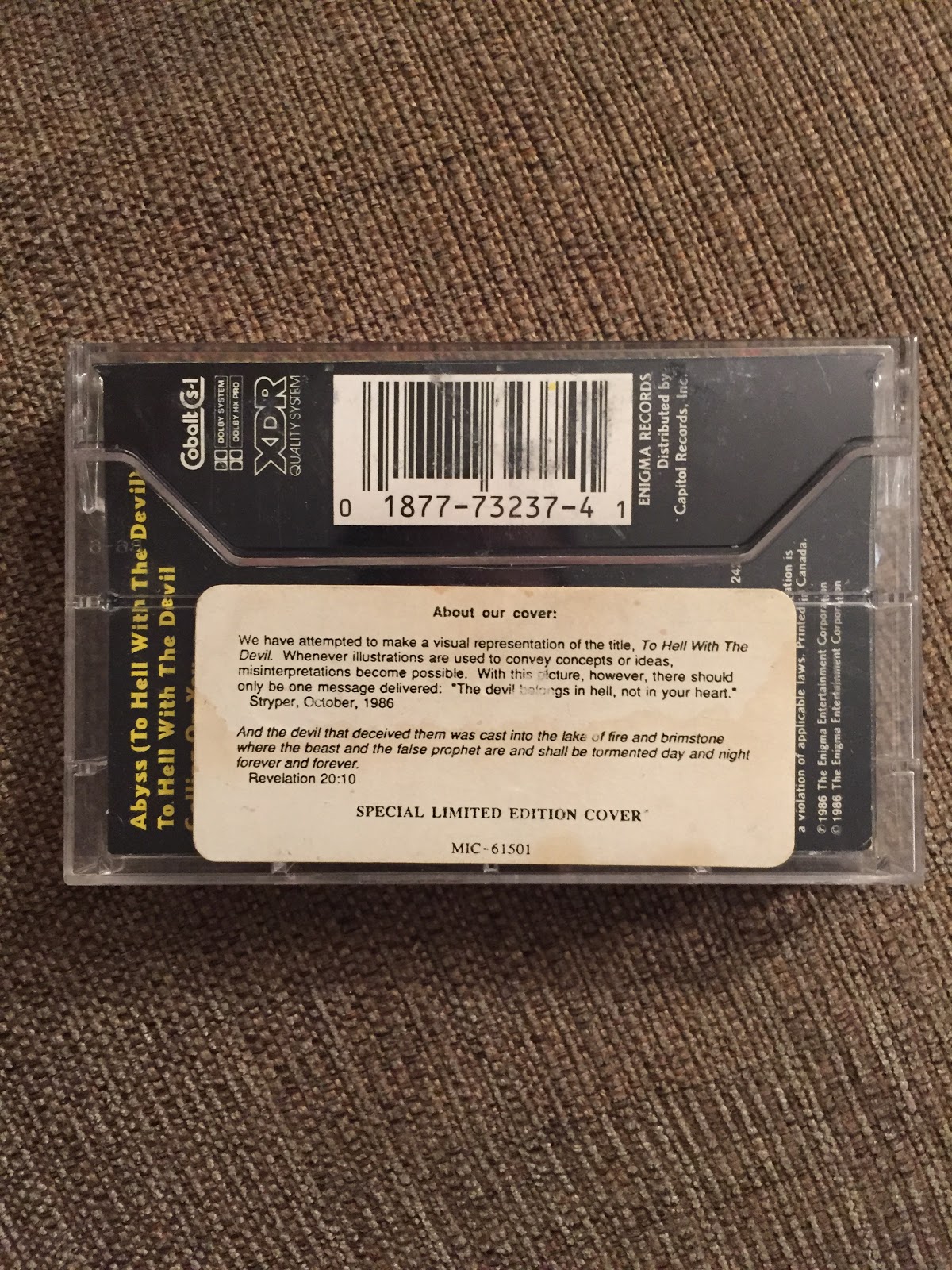
So what makes this album so special?  Let's start with the cover art.  I had no idea how fortunate I was when I picked up my cassette copy from Beethoven's Records at Greentree Mall in Clarksville, Indiana, back in 1986.  The label on the back noted that this was a "special limited edition cover" and went on to explain that the imagery, while possibly evoking misinterpretations, was intended by the band to illustrate Revelation 20:10, which states the devil would one day be cast into a lake of fire for eternity.  This cover was changed for later pressings of the album and replaced with an all-black cover with the band's logo and the album title in red calligraphy, and while this was fine, the so-called "angel cover" remains the desired collector's item.


From its eerie instrumental opener "The Abyss," the album moves straight into the title track that to this day is a crowd favorite.  A swaggering drum beat, killer guitars, and Michael Sweet's signature, glass-shattering scream announce that this is '80s metal as it was meant to be, loud, bold, and in your face.

From there we're given a generous selection of what the genre did best.  There are the pop metal sounds of "Calling On You," "Sing-Along Song," and "Holding On."  There are the ballads, including the MTV favorite "Honestly" and the tragically overlooked "All Of Me," which Michael sings almost entirely in the upper part of his range and works equally as a statement of a Christian's commitment to Christ or an exquisite love song between a man and a woman.  And of course there are the no-holds-barred, sock in the chops, make-your-ears bleed rockers "Free," "The Way," "Rockin' The World," and "More Than A Man."

Enjoy some videos from this now classic album and if you're old enough, remember what hair metal was like in all it's glory.  And hey, if you're not old enough to remember, consider this a history lesson...a history lesson that rocks!


"To Hell With The Devil" live in 2016

"Honestly," Official Video


"Calling On You," Official Video


Monday, October 16, 2017

Falling To The Top

On October 16, 2015, Stryper released Fallen, their eleventh studio album.  Before I get to some thoughts on the music, I want to talk about why this album has a particular meaning for me that no other album has.

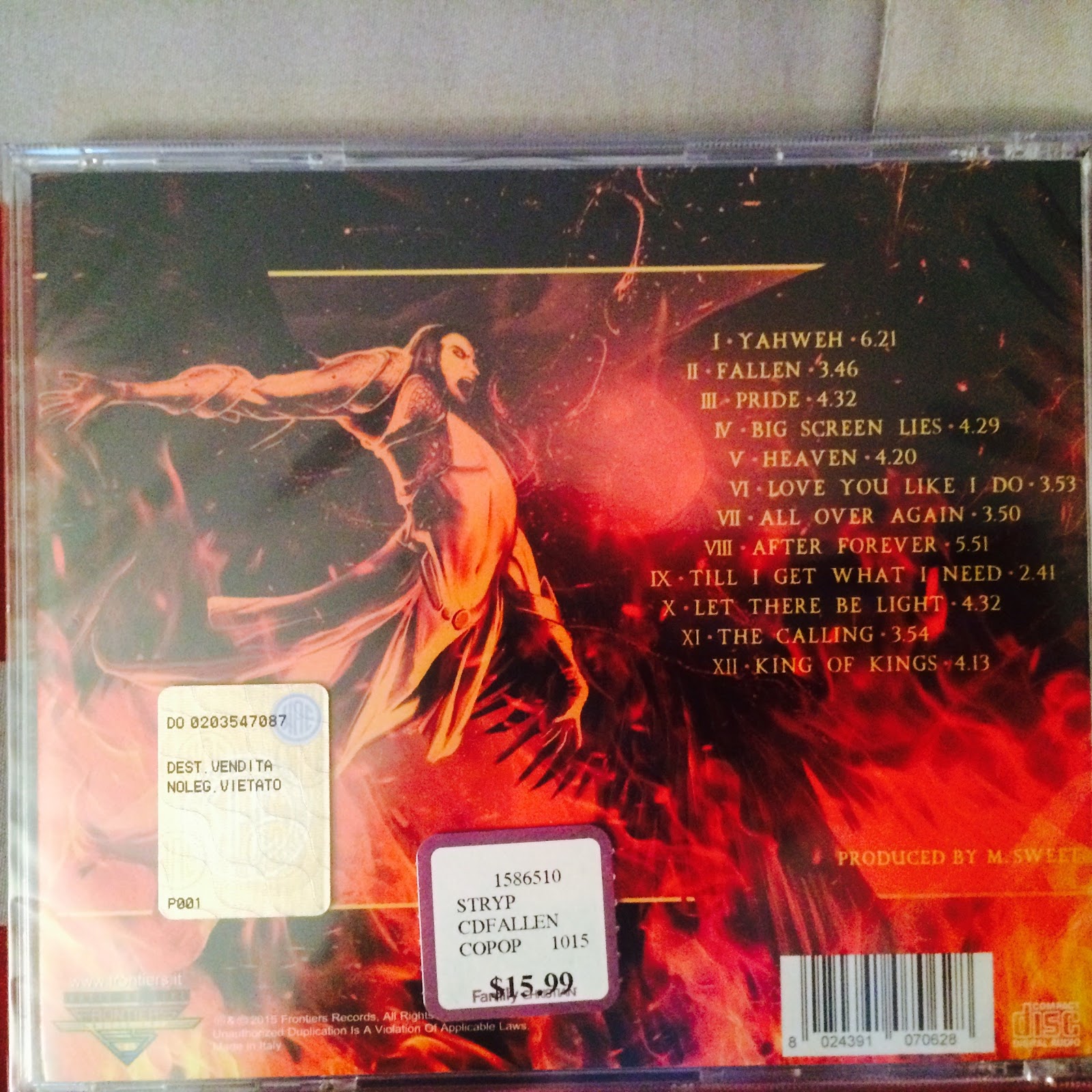
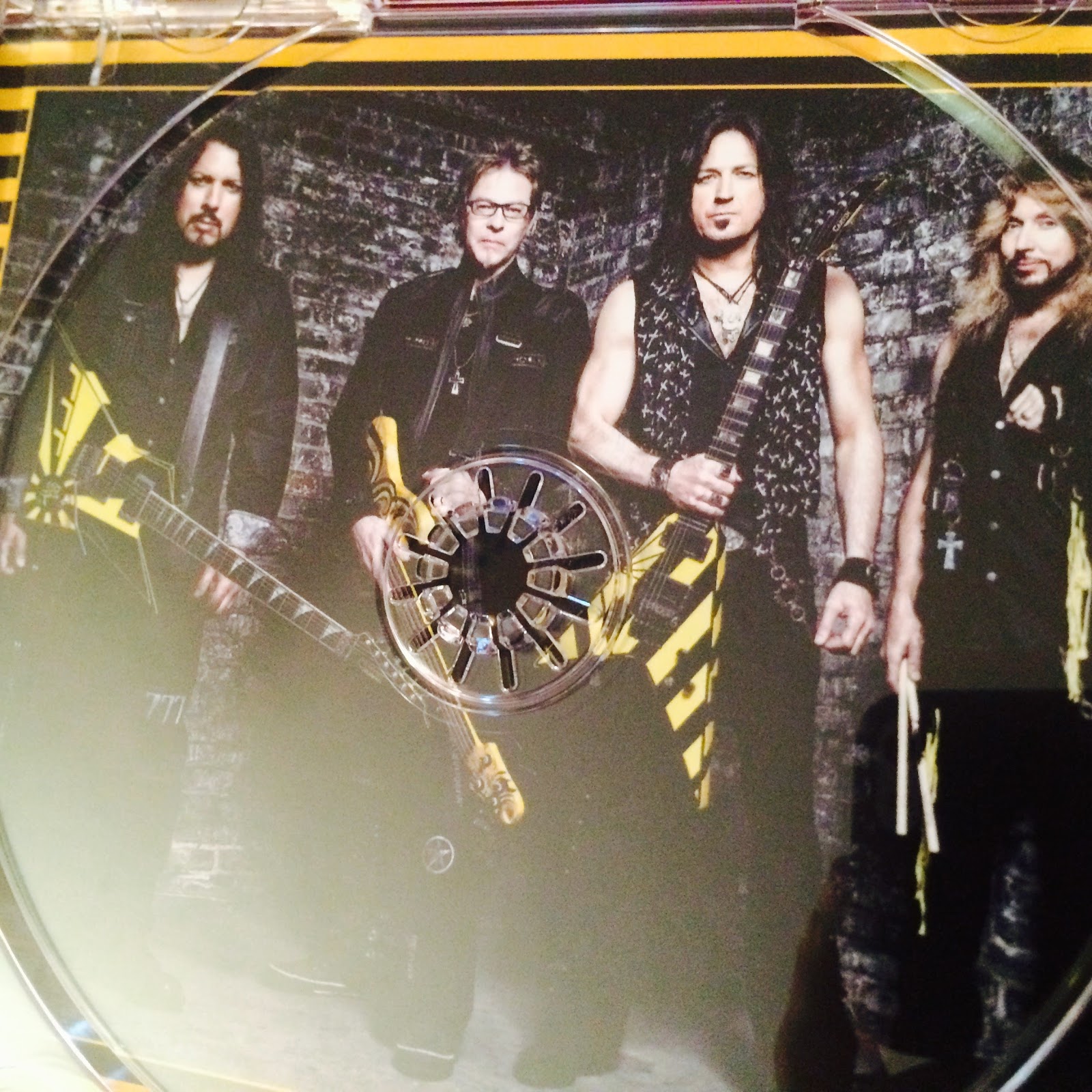
October 16th was a Friday in 2015, and since I was scheduled to fly out of town that afternoon, I asked my wife to purchase the CD for me and my teenage son to rip it for me so I could put it on my phone for listening on the plane.  At some point in the day, I felt my phone buzzing like mad with incoming text messages, and at my first break I pulled it to see what was going on.  My son had started texting me pictures of the album...CD cover front and back, liner notes, the disc itself, and the interior of the jewel case.


I have told him numerous times how much that meant.  Neither my wife nor daughter are the music nuts that my son and I are, and while Stryper may not be to his taste (he is a for King & Country, One Direction, Toby Mac, Harry Styles kind of guy), he knew that I would want to see what the album looked like.  I will never be able to listen to this album without thinking of the kindness of my son.


So, what does the album sound like?  What follows is the review I wrote of it two years ago on another blog.  As I listened to the album again today on the way to work, I can honestly say I would not change a word.  Oh, and at the end of the review, check out the two videos for the songs "Fallen," "King of Kings," and "Yahweh" that I put together with some classic art.


In October the metal band Stryper released their eleventh studio album since blasting onto the scene in 1984.  I have been a fan the whole time and am writing this review just so I can be part of the historical moment that is the re-birth of classic metal.  Stryper’s album Fallen proves what talented musicians can do who stay true to their roots, care about their fans, and have enough creativity not to live on the glory days but to create new ones in keeping with the times.


The opening track, “Yahweh,” begins like no other Stryper song.  It starts with an acapella choir sound that turns into a thundering, sonic guitar attack as Michael Sweet begins the story of Christ’s crucifixion.  It is an epic story, and the music stands up to it.  The entire album has a ten-foot deep, concrete foundation made out of Robert Sweet’s pounding drums and Tim Gaines’s aggressive bass.  On this track they combine to lend the perfect tone to this tale.  And let’s be serious.  If you are going to open your album with this story and a sound this big, the audience knows it is going to be a killer album in whole.


From there we get the title track, and one cannot help thinking of the epic poem Paradise Lost as we get the story of Satan’s fall from glory told in traditional Stryper guitar attack style.  Michael’s high scream opens the tale and resurfaces in the chorus, which always has me reaching for the volume to turn it up.

“Pride,” for which the band released their first official video, picks up the dark, heavy sound from “Yahweh” for the third track, and again we have the pounding rhythm section to open.  We are treated to a beautiful melody that morphs into a gritty scream during the chorus, and those who have never heard Michael Sweet simply accept his powerful vocals, but those of us who have heard him for three decades stand in awe at how he has continued to grow.

“Big Screen Lies” is a fun tune with another aggressive, rhythmic opening.  It talks of how Christianity is portrayed in popular media, something the boys in Stryper know a little about.  It has that in-your-face, “We’re Not Gonna Take It” it feel of “Loud ‘n’ Clear” off their debut album.  The chorus features thundering guitars, and the song ends with a gritty, greasy, snarling vocal.

The next track, “Heaven,” would have been at home on the Sweet & Lynch album Only To Rise.   This is another song of rebellion against what others think is the way to go.  Michael has strong, soaring vocals without going into the stratosphere.  It is again an in-your-face lyric.

“Love You Like I Do” almost has a Whitesnake feel in the very opening.  It is a call-and-response song that could be seen as a lyric between a man and a woman, but is more likely, and more reasonably, a lyric between God and His creation.  I could not help thinking of Oz Fox’s wife, Annie Lobert, in this one, as she leads the fight against sexual exploitation of women.  No one will ever see us as God sees us, certainly not those who see us only as means to an end.  And speaking of Oz, his guitar work has been killer on ever track, and the guitar solo on this song begs to be seen live in concert.

“All Over Again,” for which the band and their wives have released the album's second official video, is a country-rock ballad and may be the best of their career.  Let’s face it.  A fair portion of their fan base is of a maturing age.  This lyric hits home.  It is not a rose-colored glass view of the past, but one that can honestly say that with the good and the bad, we would not change a thing, but would do it all over again.  It is a big sound, worthy of the cowboy rocker of the ‘80s and perfectly suited for today.

“After Forever” was the track a lot of people were eager to hear.  It is a cover of Black Sabbath and, despite that this may get me negative comments, I will go on record as saying the cover is better.  It is sharp, clean, and aggressive.  It is a perfect fit for Stryper, and the boys carry it off perfectly.

The next song, “Till I Get What I Need,” is a fast, blistering number that seems directly born from Michael’s autobiography Honestly.  It has the classic Stryper guitar sound that would have been at home in the ‘80s, yet sounds in no way dated.

I’m not sure what it is, but I often like the last two or three tracks of an album the best.  Time and again for a variety of artists, these seem the heaviest.  "Let There Be Light" would have gone well on their last album, No More Hell To Pay, and is musically in that vein.  Again we have a strong, epic sound to the epic story of Genesis.

"The Calling" may be my favorite.  It is a chest-beating, bold, head-thrown-back anthem, with a fast and aggressive rhythm.  It has almost a classic rock sound at points.  Matthew Arnold, the famous scholar of Homer, said the Greek poet had a fast-moving, forward-driving feel to his poetry.  The same is true in this song.  It grabs you and drags you along at Mach I.

The final track, “King of Kings,” is another that would have gone well on the last album.  Stryper has always given us anthems, and this is one that calls to mind the expansive chorus of “Passion” from the Reborn album.  We have a sonic race at the beginning that slows and hits a slower, powerful stride in the chorus, forcing us to listen and, if so inclined, to belt out the lyrics, too.

And speaking of lyrics, I have to say these are some of Stryper’s best.  The stories are epic, yet the lyrics have a way of speaking directly to us.

If you did a word count, you would see I used “epic” and “aggressive” more than any other.  This is how I like my music.  In one of hissongs, country singer George Strait sang, “I don’t want you under my roof with your 86 proof watered down ‘til it tastes like tea.  You’re gonna pull my string, make it the real thing for me.”  I couldn’t agree more, and Stryper delivers better than ever.


Wednesday, October 4, 2017

The Future of Rock

Who needs mo' cowbell when you've got Mo Formica?  Thanks to a recent episode of The Voice, the world is coming to know teen rock phenom Moriah Formica.  Her performance of Heart's classic "Crazy On You" wowed the judges and has garnered nearly 400,000 views on YouTube in just a few days.  Take a listen and see if you can believe that this powerhouse is just sixteen years old!


I first started hearing Moriah Formica's name a year or so back when Michael Sweet of Stryper started talking about her.  He was impressed enough with her sound when she was still fifteen (just pause and ask yourself what you were doing at that age) that he invited her onstage with Stryper to sing their epic "To Hell With The Devil."


Now, let's just take a moment to consider all this.  This young lady has a voice that can belt out rich, punch-in-the-face songs like "Crazy On You."  She has a range that can hit the high notes of Michael Sweet.  Oh, and she has stage presence.  Seriously, go back and look at the video of her singing "To Hell With The Devil" again.  Does she not look as if she absolutely belongs on stage with those veteran rockers?

Michael Sweet knows a good thing when he hears it, and that's why he asked her to sing lead on "Can't Take This Life," the final track on his monstrously successful One Side War album, which went to #1 on the Billboard Top Hard Rock Albums in October of 2016.


As readers of this blog know, I am a high school Latin teacher at a large public high school in Indianapolis.  I see almost 4,000 students walking the hallways each day, and nearly two hundred of them pass through my classes.  I have the privilege to know what many adults do not or simply ignore.  Teens are amazingly capable people.  I have seen leadership skills in teenagers that surpass those of adults in titled positions.  One of my students while still in high school once presented a paper at a medical conference of doctors and scientists based on research she had completed.  And I have known many talented young musicians and artists, one of whom, Brandon Signorino, is now a teacher himself at our local School Of Rock.  It is easy to comment on the shortcomings of the current teenage generation when social media makes the foolishness of all generations trending news.  Yet I can tell you from more than a quarter century of direct experience, teens have amazing abilities and can do incredible things if adults will just check them out.  Whether it is covering the classics of rock or recording her own material, like "Time," Moriah Formica is taking her place in the pantheon of music.  The good news for us is that she has many, many years of powerful recording and performing ahead.


Thursday, September 14, 2017

Music That Transports You

Now and then when I see her face
She takes me away to that special place
And if I'd stare too long
I'd probably break down and cry


Sometimes it is a face, sometimes it is a fragrance, and sometimes it is music that takes us to that special place.  I was recently reminded of just such a piece, and it opened up for me a fantastic new line of music.

I was recently watching this documentary on legendary guitarist Ritchie Blackmore, who rose to world-wide fame as one of the founders of Deep Purple.  Following his departure from Purple, he established Rainbow, another classic rock act that showed us the incomparable talent of vocalist Ronnie James Dio.


I had long known that following Rainbow Blackmore had formed Blackmore's Night with his wife, Candice Night, and that this group was focused on the sounds of traditional folk and Renaissance music.  Although that might seem quite the departure for the man who gave us the immortal riff in "Smoke On The Water," hints of this direction can be heard in tracks like "Soldier of Fortune" on the 1974 Stormbringer album.  Despite having known about Blackmore's direction, I had never listened to much of Blackmore's Night until I finished watching the documentary on his life.  All I can say is that the delay in listening to this band was a huge mistake.

In the documentary Blackmore talked about the influence of the late 16th century song "Greensleeves" on him when he was a boy.  I was struck speechless.  Over the years I had been singing the variant lyrics "What Child Is This" to this tune and had more or less forgotten how striking the original "Greensleeves" had been to me as a boy as well.  At some point in elementary school or early junior high, I was introduced to "Greensleeves," and it touched a very deep place within me.  It would not be saying too much to say that it awakened me to emotions that can only be described as haunting, melancholy, and wistful.  It introduced to me at that young age the possibility of a past and the aching and longing for what had been.  Somehow I acquired a discarded school choir book and was thrilled to find that song in it and can still remember through "misty, water-colored memories" the picture of a minstrel that accompanied the lyrics and music.

So I went in search of Blackmore's Night online and began with their rendition of "Greensleeves."  I cannot recall the last time I listened to the same song four or five times in row.  Blackmore's playing and the vocals of Candice Night, which may be perhaps the purest sounds I have ever heard, transported me to another time and place, and I knew I had to hear more.
  

Since then I have listened to snippets from all of their albums and have begun to settle in to listening to them completely and with attention.  Their songs are exquisite and beautiful and haunting.  They take you places rather than shout messages in your face.  And it is neat to listen while realizing that the guitarist behind these tunes and the musical director for this band is none other than Ritchie Blackmore, who once smashed a television camera with the neck of his guitar during a live broadcast.


Thursday, September 7, 2017

Deep White Purple Snake

Take a bunch of '70s hard rock songs, 'Snake 'em up a bit, and what do you get?  You get a killer collection called The Purple Album by the one and only Whitesnake.  When I heard about this project by David Coverdale in 2015, I could not have been more excited.  I'm a huge fan of Deep Purple, especially the Mark III lineup that introduced Coverdale to the world in 1973, and an as big or bigger fan of Whitesnake.  The two albums he recorded with that lineup (Ritchie Blackmore on guitar; Jon Lord on organ/keyboard; Ian Paice on drums; Glenn Hughes on bass), Burn and Stormbringer, are classic '70s albums and two of my favorites.  He recorded one more album with the Mark IV lineup (Tommy Bolin on guitar), its only release, called Come Taste The Band.

According to Coverdale, his desire was to take some of the great tracks from these albums and give them the Whitesnake flair.  Some did not love the result, but many of us did.  One thing the album proves is how these songs have held up over time.  Coverdale has said that some of the members of Whitesnake remarked that the songs could have been written yesterday, and this album shows that to be true.


Those who are serious Deep Purple fans cannot help comparing and contrasting the new versions with the originals.  I even made a playlist on my phone called "Deep White Purple Snake" in which I put all of the songs, alternating the original with the new version so I could listen to each one back to back.  If The Purple Album alone proves the quality of the originals, hearing the originals against the remakes takes away all doubt.  The original recordings were simply superb, and this is due in no small part to the contributions of Jon Lord on organ and keyboard.  There is nothing in the world like his playing, and while some of those parts have been taken over by guitars on The Purple Album, the sound of the Hammond organ is unequaled and irreplaceable.

That said, the "'snaked up" versions are a treat as well.  Consider this rendition of the 1974 classic "Stormbringer."


No, it is not the original, nor should it be since that was not the aim of this project.  The Purple Album was not a release of remastered originals.  It was a re-recording with a different band, a re-recording envisioned and directed by one of the principal creators of the songs, David Coverdale.  I can enjoy his three albums with Deep Purple from the 1970s and this album from 2015.  Give it a listen.  It will blow you away.

An Iconic Band

  What do you get when you get when you throw Michael Sweet (Stryper), Joel Hoekstra (Whitesnake, TSO, Cher, Night Ranger), Tommy Aldridge (...